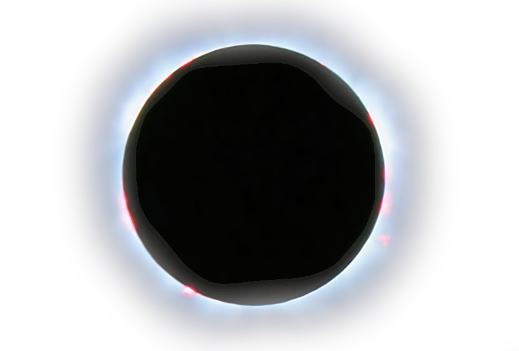
 The Catalogue of The Historical Observations of Solar Eclipses from Europe and Middle East
Preface
The catalogue represents the results of several years’ work by the author devoted to gathering information about historical observations of solar eclipses. The present collection is concerned with the region of Europe and the Middle East.
The literature on this subject includes many works relating to observations of solar eclipses but the author has not found any comprehensive study which presents a list of all interesting phenomena.
Moreover, many of the stated observations have not been quoted in any known literature.
The catalogue contains a chronological list of eclipses for which it was possible to find historical documents allowing the determination or assessment of the eclipse phase in a given location. Thus, the catalogue contains data for the following types of eclipses :
- total, when the source text states it beyond reasonable doubt,
- when there is a supposition that the description may exactly reflect such phenomena, or gives other information which allows one to arrive at a conclusion as to the phase of the eclipse, e.g. perception of stars, appearance of unusual darkness, accompanying phenomena (reactions of people and animals, comments on the solar corona and prominences etc.),
- partial, when this word is used in relation to the description of a phase,
- partial, for which the moments of contacts and/or maximum phase have been timed,
- partial, described as the appearance of a solar crescent,
- partial near the horizon,
- partial, in regions near the path of totality, described as the appearance of a distinct dimming of daylight.
Generally speaking, partial eclipses were quoted in the cases when the path of centrality was running through the countries of Europe and the Middle East.
However, partial eclipses near the horizon and those with the timed contacts and the greatest phase estimation are included.
On account of this, the catalogue does not include all reports which relate to partial eclipses. Of course, a large number of casual historical reports which do not meet the above stated criteria have not been included either.
The term “Middle East” has been used arbitrarily - it should be understood more broadly as encompassing the countries of North Africa and West Asia. Sometimes, the data on eclipses goes beyond this area, e.g. in the case of some eclipses from the end of the 19th century, even data from the areas of Siberia and South Asia were included to ensure the continuity of data on the specific observed eclipse.
“The Collection of the Historical Descriptions of Solar Eclipses” containing source texts in their original language and in English, form an additional set of documents not directly included in the catalogue. This collection covers the period to the end of the 18th century.
A complete interpretation of the descriptions must be supported by the analysis of source texts.
The major part of the catalogue for pre-telescopic times has been prepared on the grounds of chronicle sources, because information supplied by astronomers was rather rare.
Three separate sets of astronomical observations have been collated and included at the end of this part of the catalogue. They are :
- a collection of the Islamic observations from the years 829-1004,
- a collection of the observations made in Western Europe from the 14th century to the 17th century before the aid of telescopes,
- a collection of the Polish observations from the 14th century (mainly Nicolaus Copernicus’ observations).
The situation changed at the beginning of the 17th century. The invention of the telescope radically influenced astronomical observations. The number of solar eclipse observations also increased significantly. Therefore, the set of solar observations for the telescopic period was separated and presented in a more detailed format. The source texts are given up to the end of the 18th century. From the 19th century onwards, solar eclipse observations are so numerous that it was not purposeful to collect complete descriptions of them, which sometimes are separate, extensive reports. In each case, however, literature data in the catalogue are provided (most of which are available on the Internet).
This period dates back to 1914, when a great solar eclipse of August 21 happened three weeks after the outbreak of World War I.
The collection of maps containing the paths of centrality, with observing locations, has been added as a supplement at the end of the catalogue.